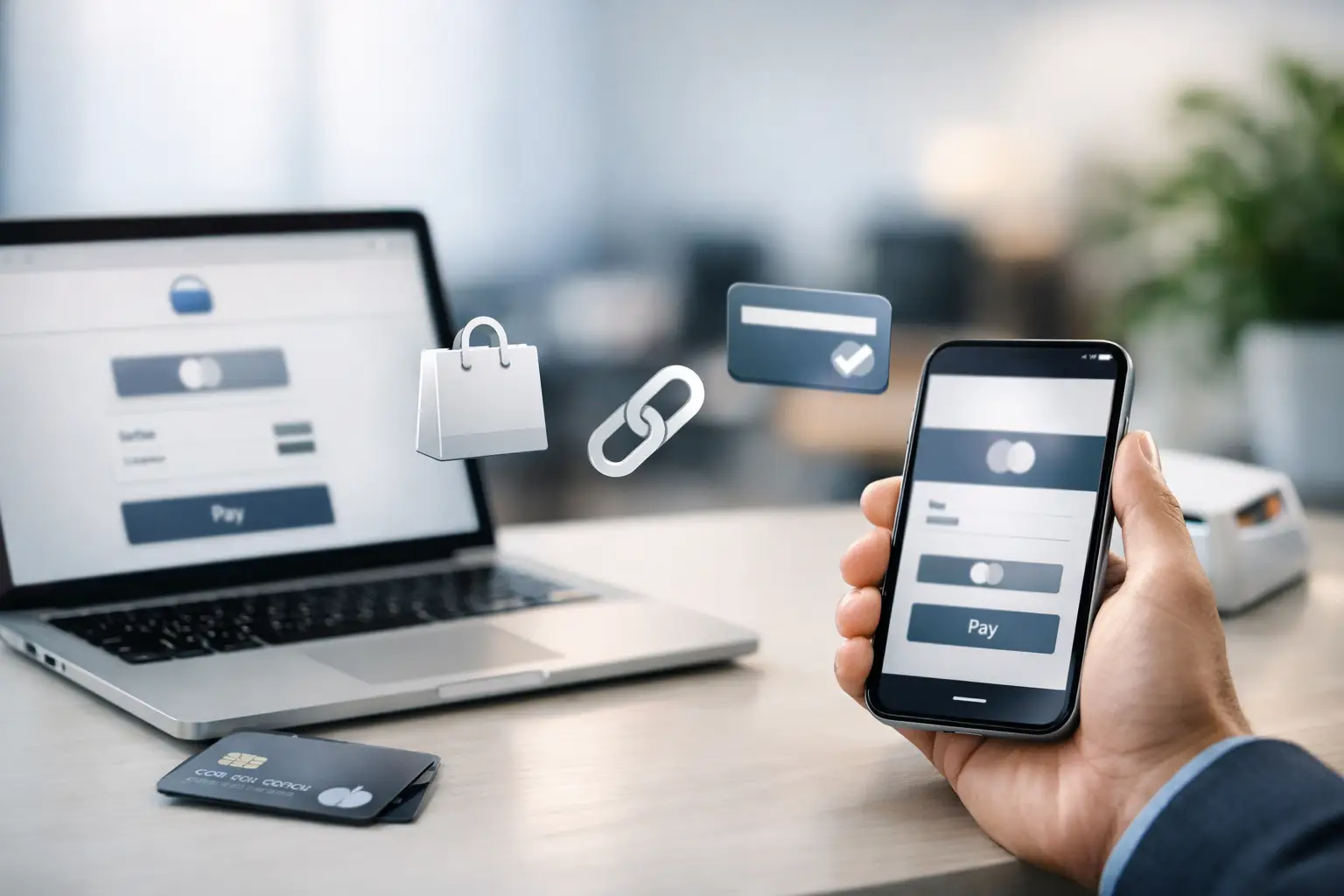
A payment request sent as a long, unfamiliar checkout URL can create hesitation at the exact moment a customer is ready to buy. What are branded payment links? They are payment URLs that use your recognised domain, naming and campaign details to take customers directly to a secure checkout. Instead of sharing a generic processor link, you send a clear, trackable route to payment that looks and feels like part of your business.
For a freelancer chasing an invoice, a creator selling a download, an event organiser taking ticket payments or a charity running a fundraising campaign, that clarity matters. The link is not just a technical shortcut. It is a distribution asset that can carry your brand, reduce uncertainty and show which channels are actually producing revenue.
What are branded payment links?
A branded payment link is a custom web address that opens a pre-configured payment page. It usually combines a branded domain or subdomain with a readable path, such as `pay.yourbrand.co.uk/workshop` or `go.yourbrand.co.uk/consultation`.
Behind that link is a checkout configured for a specific purpose. It may have a fixed price, a selected product, an optional quantity, a donation amount or a booking deposit. Depending on the payment setup, it can also collect customer details, apply tax, offer discount codes and redirect buyers to a confirmation page after payment.
The word “branded” can describe more than the URL itself. A strong payment flow also uses your business name, logo, colours and clear product description on the checkout page. The goal is continuity: the person who clicked your email, QR code, social post or message should immediately understand where they are, what they are paying for and who will process the charge.
A short payment link can be branded without being a payment system on its own. Payment processing, card handling and compliance remain the responsibility of the connected provider, such as Stripe. Your link management platform provides the branded entry point, routing, campaign controls and analytics around that checkout.
Why a generic checkout URL can cost sales
Generic links are functional, but they often look random. They can be long, use an unfamiliar domain and reveal nothing about the purchase. That may be acceptable for an existing client who expects an invoice. It is less effective when a new customer sees the link in a social bio, printed QR code or direct message.
A branded link makes the destination easier to recognise before the click. It also lets you use a name that describes the offer: `/annual-membership`, `/donate`, `/deposit` or `/spring-tickets`. This is particularly useful on mobile, where customers make quick decisions and have little patience for unclear steps.
Trust is not guaranteed by a branded URL. Customers still need accurate pricing, a professional checkout, transparent refund terms and a payment provider they can use confidently. But consistency removes one avoidable point of friction. It signals that the payment request belongs to the business they chose to engage with.
There is also an operational benefit. When each offer has its own labelled link, teams do not need to search through an unstructured list of invoices or payment-provider records to understand what a transaction relates to. The link name itself creates useful context.
How branded payment links work in practice
The setup is straightforward. First, create the product, service, donation or deposit you want to collect. Set the amount and payment rules, then connect the checkout to a custom short domain. Finally, create a memorable slug and place the link wherever your audience is most likely to act.
For example, a consultant could create one payment link for a £75 strategy call and another for a £250 discovery workshop. The first can be shared after an enquiry, while the second appears on a proposal page. Both use the consultant’s own domain, but each leads to the relevant checkout with the correct amount already set.
An event team can use separate links for early-bird tickets, standard tickets and sponsor packages. A nonprofit can create campaign-specific donation links for a winter appeal, a local fundraiser and a supporter newsletter. A retailer can connect links to individual products or limited-time offers.
This separation is what makes payment links useful beyond a basic “pay now” button. Each URL becomes a distinct, measurable route to revenue.
Fixed-price, flexible and recurring payments
The right payment link depends on what you sell. A fixed-price link suits a ticket, digital product, package or deposit. A flexible-amount link is more appropriate for donations, tips or customer-selected contributions. For recurring services, the checkout may start a subscription rather than take a one-off payment.
Keep the decision simple for the buyer. If a price needs explanation, provide that context before they reach checkout. A payment link should complete a clear decision, not force someone to work out what they are being asked to purchase.
Links, QR codes and embedded payment routes
A branded payment link works wherever a URL can be shared. Put it in an email campaign, a website banner, a proposal, an invoice reminder, a calendar follow-up or a direct message. Turn the same destination into a QR code for posters, menus, event signage, printed brochures or face-to-face sales.
You can also use the link behind a button on a landing page or link-in-bio page. The destination remains consistent while the presentation changes to fit the channel. That makes it easier to build one payment journey rather than maintaining separate checkout setups for every campaign.
The analytics advantage: measure the route to revenue
Payment processor data tells you that money arrived. Link analytics can help explain what happened before the purchase. With a dedicated branded link for each source or promotion, you can compare clicks, locations, devices, referrers and conversion patterns against completed payments.
Suppose you are promoting the same workshop through LinkedIn, a newsletter and a QR code at a networking event. One generic payment URL gives you limited context. Three distinct branded links let you see which route generated attention and which one generated paid bookings.
Do not create a new link for every minor variation without a naming convention. That produces noisy reporting. Use a structure your team can understand, such as offer-channel-date: `workshop-linkedin-may`, `workshop-email-may` and `workshop-qr-may`. The naming should remain useful months later when you review campaign performance.
Analytics are most valuable when they inform a decision. If newsletter recipients click but do not pay, review the offer, price, landing-page context or checkout experience. If QR scans convert strongly, place the code in more high-intent physical locations. The link should help you improve distribution, not merely report clicks.
When branded payment links are the best option
Branded payment links work especially well when the path to purchase begins outside a conventional ecommerce basket. Service businesses can request deposits after a consultation. Creators can sell directly from content. Event organisers can collect payment from a poster scan. Fundraisers can share a focused donation route. Teams can send a payment request without building a new page for every offer.
They are less suitable when customers need to compare many variants, customise a complex order or manage a large basket. In those cases, a full ecommerce storefront may be the better buying experience. A payment link can still support the journey for a single product, an abandoned-basket follow-up or a specific campaign, but it should not replace a proper catalogue where one is needed.
The same principle applies to higher-value B2B sales. A branded link is excellent for an agreed deposit, a renewal or a defined service package. It is not a substitute for a detailed proposal, contract approval or purchase-order process where those steps are required.
Set up payment links with control, not clutter
Before publishing a link, check the checkout from a customer’s perspective. The product name should be specific, the amount should match the offer, and the confirmation message should explain what happens next. If you collect booking payments, state how the customer receives their appointment details. If you sell a digital item, make delivery expectations explicit.
Use a domain you control, reserve clear naming patterns and avoid changing a live destination without checking the effect on active campaigns. If a link appears in a printed QR code, a social post or an automated email sequence, it may continue receiving traffic long after launch.
A unified platform such as flnk.it can keep branded links, QR codes, payment collection, contact records and campaign reporting in one workspace. That reduces the hand-offs between separate tools and makes it easier to trace a payment from the first click to the follow-up message.
The best branded payment link is rarely the cleverest one. It is the one a customer recognises immediately, can use without friction and gives your team a clear signal about what to do next.
Comments (0)
Be the first to comment.
Leave a comment